Physical Address
304 North Cardinal St.
Dorchester Center, MA 02124
Physical Address
304 North Cardinal St.
Dorchester Center, MA 02124
Ottawa — CanadaToday.online
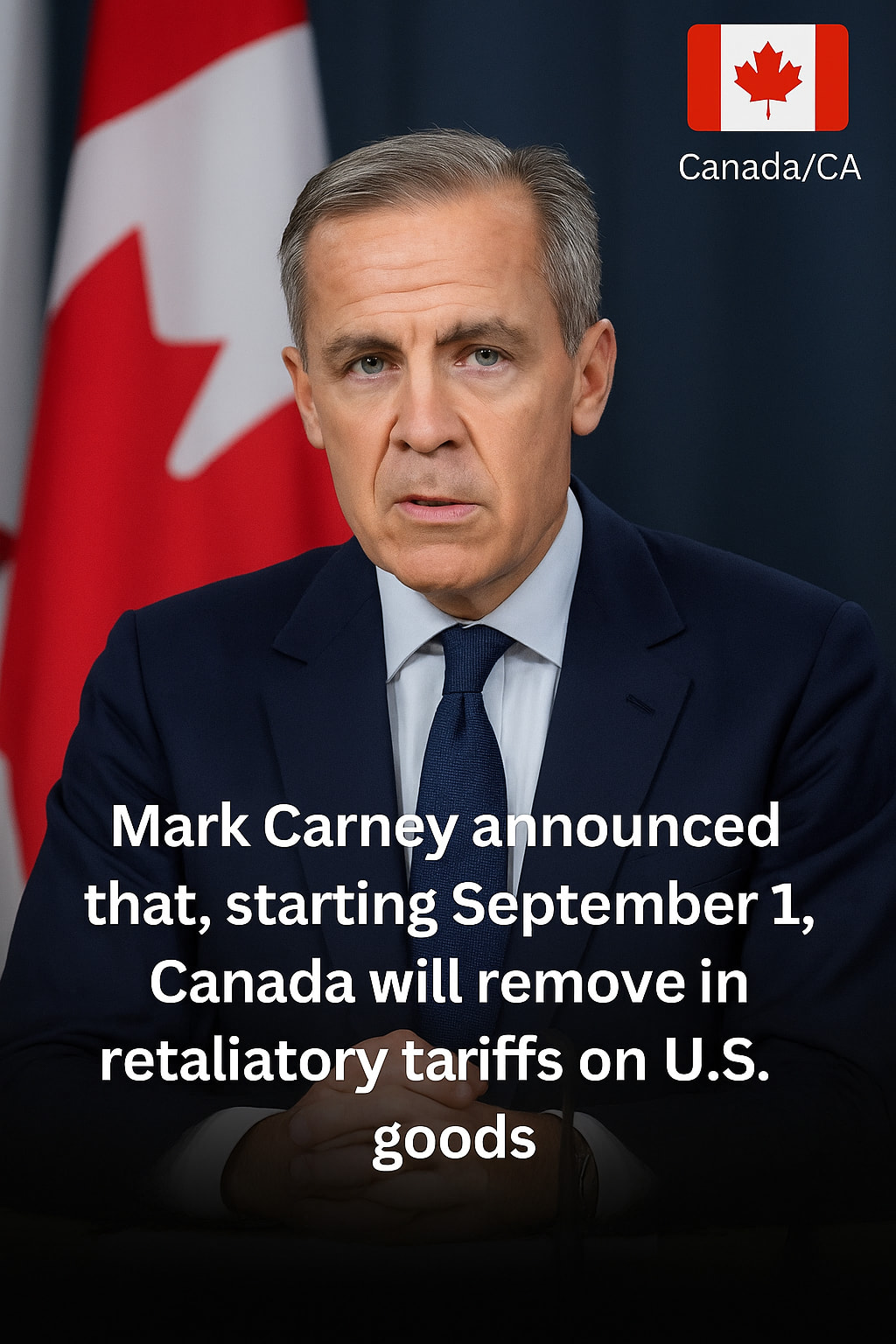
Prime Minister Mark Carney has announced a major shift in Canada’s trade policy, confirming that beginning September 1, 2025, the government will remove billions of dollars’ worth of retaliatory tariffs imposed on U.S. goods. The move signals an effort to ease escalating trade tensions with Washington while ensuring that Canada maintains its strong economic footing under the Canada–United States–Mexico Agreement (CUSMA).
The retaliatory tariffs were originally introduced in response to U.S. trade measures that targeted Canadian steel, aluminum, and other sectors. While many of those tariffs remain in place, Carney’s latest announcement confirms that Canada will roll back duties on a wide range of American imports—including consumer goods, food products, and household items—valued at several billions of dollars annually.
“This decision reflects Canada’s commitment to fair and balanced trade,” Carney said at a press briefing in Ottawa. “By removing these tariffs, we not only support Canadian families and businesses but also open the door to stronger cooperation with our most important trading partner.”
Although a detailed list has yet to be published, sources within the Department of Finance say the tariff relief will cover:
Tariffs on steel, aluminum, and automobiles, however, will remain in place for now, underscoring Canada’s strategy to protect its critical industries while still easing tensions.
The rollback is expected to bring immediate relief to Canadian retailers and consumers. By lowering import costs, businesses will have greater flexibility to maintain or even reduce prices on everyday goods, which could help ease inflationary pressures.
Economists note that the move is also aimed at boosting consumer confidence heading into the fall, as Canadians continue to navigate the effects of global inflation, supply chain disruptions, and shifting trade alliances.
Trade experts see this as a pragmatic step in repairing strained relations between Ottawa and Washington. While political disagreements remain, especially over protectionist policies and tariffs on key industries, the rollback signals a willingness by Canada to de-escalate.
“This is a smart political and economic move,” said one international trade analyst. “Canada is showing it’s prepared to compromise where possible, while still defending its core industries. It puts pressure on the U.S. to reciprocate in good faith.”
The tariff rollback is set to take effect on September 1, 2025, and Canadian officials say they will continue to review trade measures in the months ahead. The hope is that this shift can lead to renewed negotiations with the U.S., ensuring greater stability for businesses and consumers on both sides of the border.
For now, Canadians can expect some relief on the prices of imported U.S. goods—a move that underscores Canada’s strategy of balancing economic resilience with pragmatic diplomacy.