Physical Address
304 North Cardinal St.
Dorchester Center, MA 02124
Physical Address
304 North Cardinal St.
Dorchester Center, MA 02124

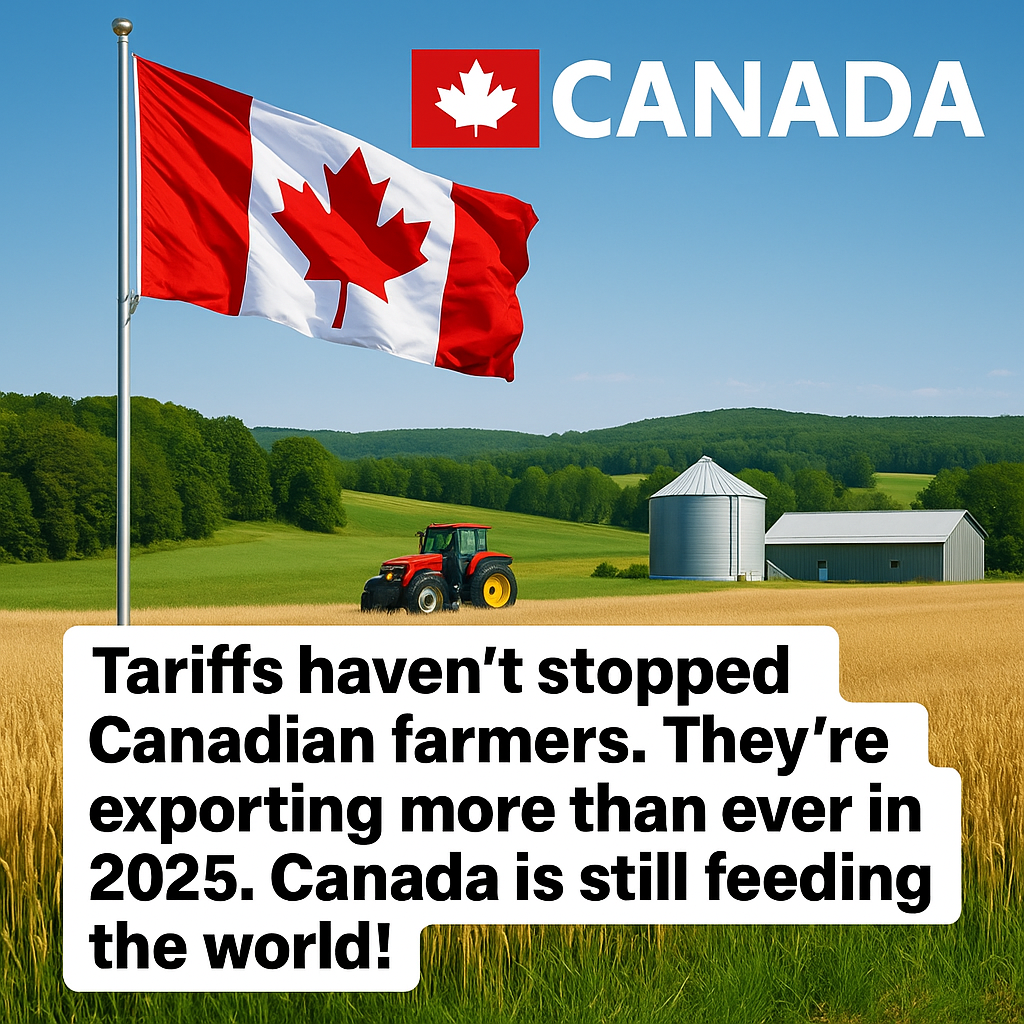
Despite facing ongoing tariffs and global trade pressures, Canadian farmers have once again proven their resilience and strength. In 2025, Canada’s agricultural sector is not only surviving but thriving—exporting more goods than ever before and ensuring that Canada remains a global leader in food production.
Farmers Rising Above Trade Barriers
The imposition of tariffs by international markets was expected to hinder Canada’s agricultural exports, particularly in key sectors like grains, meat, and dairy. However, farmers across the country have defied the odds, finding new buyers, boosting productivity, and leveraging innovative farming practices to remain competitive on the global stage.
From wheat fields in Saskatchewan to dairy farms in Quebec, Canadian producers are showing the world that tariffs may change the rules of trade, but they cannot crush the determination of those who feed millions.
Record Exports in 2025
Government reports and industry data reveal that Canada’s agricultural exports have hit record highs this year, surpassing previous levels despite the trade challenges. Demand for Canadian products—especially wheat, canola, beef, and seafood—continues to grow in regions like Asia, Europe, and the Middle East, where Canadian goods are valued for their quality and safety standards.
Feeding the World, Supporting Communities
Beyond international trade, the agricultural boom has also had a positive impact on Canadian communities. Farms are creating jobs, supporting rural economies, and keeping Canada’s food supply chain strong. For many, this success story is not just about exports—it’s about pride, sustainability, and the commitment to feeding both Canadians and people worldwide.
A Green Future for Canadian Agriculture
As global demand for sustainable farming grows, Canadian farmers are also at the forefront of adopting eco-friendly practices. Precision agriculture, reduced carbon emissions, and responsible water usage are helping ensure that Canada’s role as a food leader is built on sustainability as well as productivity.